

Before diving into the study of Jesus Christ, it’s necessary to establish whether or not Jesus was a real and historical person, or was he a figment of someone’s imagination that have become legendary. There are many claims today that Jesus Christ was simply a myth, that he never existed.
In this lesson we will examine the evidences for the historical Jesus of Nazareth – also known as Jesus Christ. In fact, most genuine scholars and historians agree that there is no doubt that Jesus Christ was a real and historical person based on these evidences
- the independent eye-witness testimonies written between A.D.37 – A.D.67
- the historical record from non-Christian sources written between A.D.50 – A.D.200
Eye-witness testimonies
In a court of law, an eye-witness testimony is a written account of what a has actually seen with his or her own eyes. It is also called a “first hand” testimony because the person who provided the testimony was actually present to witness an event.
It is what detectives use to piece together evidences during a criminal investigation and they are considered very reliable pieces of evidences when two or more witnesses have similar accounts and descriptions of a particular incident or crime.
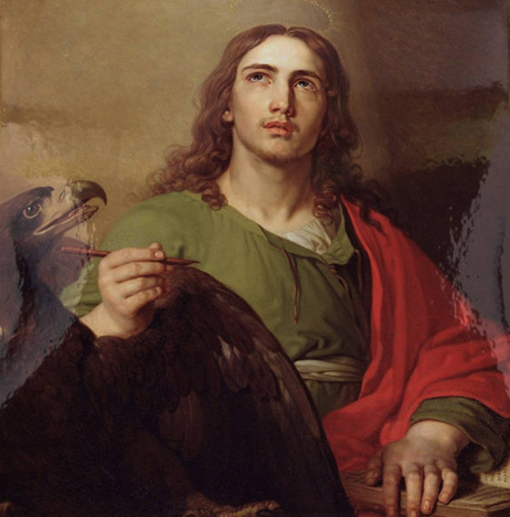
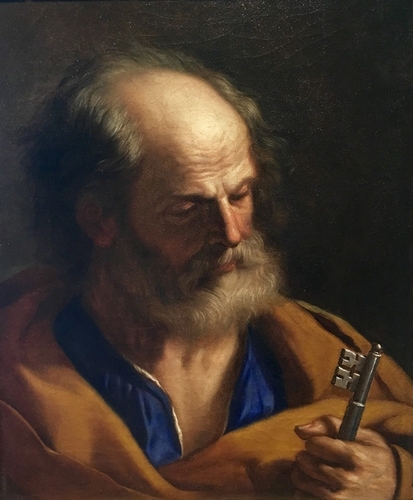
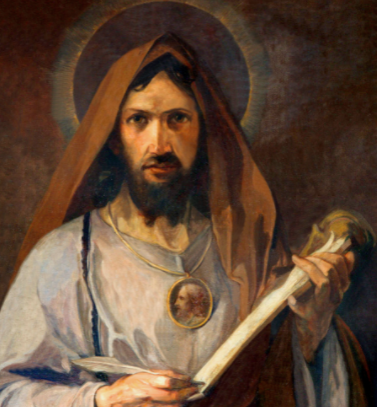
In the case of Jesus Christ, there are numerous independent eye-witness testimonies that record the teachings and works of Jesus which now form part of the Holy Bible. They were present when Jesus was alive and witnessed what he did.
These eye-witnesses and their testimonies are:

St. Matthew




Non-Christian Historical Sources
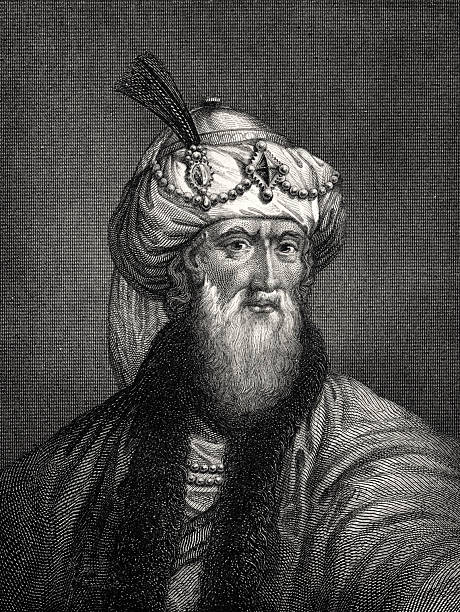
FLAVIUS JOSEPHUS: Originally known as Joseph Ben Matthias (c.37-c.100) was a Jewish historian who has written volumes on the history of the Jews. He also witness the destruction of Jerusalem in 70A.D. and recorded it in his historical works.
Josephus did not believe the claims that Jesus was the son of God and had no incentive to promote the Christian beliefs. His writings refer to Jesus as follows:
At this time there was a wise man called Jesus, and his conduct was good, and he was known to be virtuous. Many people among the Jews and the other nations became his disciples. Pilate condemned him to be crucified and to die. But those who had become his disciples did not abandon his discipleship. They reported that he had appeared to them three days after his crucifixion and that he was alive. Accordingly, he was perhaps the Messiah, concerning whom the prophets have reported wonders. And the tribe of the Christians, so named after him, has not disappeared to this day. (Antiquities 18:63)
and with reference to James the brother of Jesus, he writes…
Festus was now dead, and Albinus was but upon the road; so he assembled the sanhedrin of judges, and brought before them the brother of Jesus, who was called Christ, whose name was James, and some others; and when he had formed an accusation against them as breakers of the law, he delivered them to be stoned: (Flavius Josephus: Antiquities of the Jews Book 20, Chapter 9, 1)
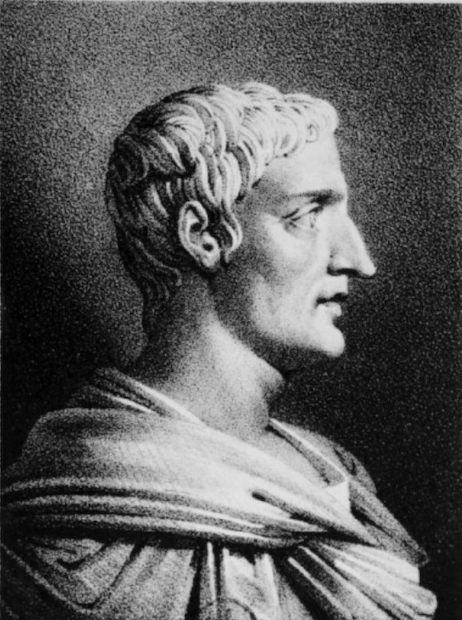
CORNELIUS TACITUS (c. A.D. 55 – 120), called the ‘greatest historian’ of ancient Rome and a senator of Rome. His most acclaimed works are the “Annals” (A.D. 14 – 68) in which he alludes to the death of Jesus Christ and to the existence of Christians in Rome.
“But all human efforts, all the lavish gifts of the emperor, and the propitiations of the gods, did not banish the sinister belief that the conflagration was the result of an order. Consequently, to get rid of the report, Nero fastened the guilt and inflicted the most exquisite tortures on a class hated for their abominations, called Christians by the populace. Christus, from whom the name had its origin, suffered the extreme penalty during the reign of Tiberius at the hands of one of our procurators, Pontius Pilatus, and a most mischievous superstition, thus checked for the moment, again broke out not only in Judæa, the first source of the evil, but even in Rome, where all things hideous and shameful from every part of the world find their centre and become popular. Accordingly, an arrest was first made of all who pleaded guilty; then, upon their information, an immense multitude was convicted, not so much of the crime of firing the city, as of hatred against mankind.” (Annals 15,44,translation from Latin by A. J. Church and W. J. Brodribb, 1876)
Cornelius also goes on to describe the torture of Christians…
Mockery of every sort was added to their deaths. Covered with the skins of beasts, they were torn by dogs and perished, or were nailed to crosses, or were doomed to the flames and burnt, to serve as a nightly illumination, when daylight had expired. Nero offered his gardens for the spectacle, and was exhibiting a show in the circus, while he mingled with the people in the dress of a charioteer or stood aloft on a car. Hence, even for criminals who deserved extreme and exemplary punishment, there arose a feeling of compassion; for it was not, as it seemed, for the public good, but to glut one man’s cruelty, that they were being destroyed. (Annals 15,44)
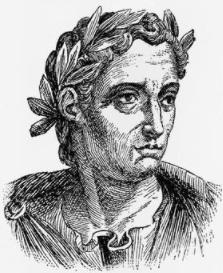
PLINY THE YOUNGER, Governor of Bithynia, Asia Minor (A.D. 112) in his letter to Emperor Trajan, sought counsel on how Christians ought to be dealt with. His letter describes the killing of Christians, and the methods he used to determine a true Christian. It is clear in the letter (Epistle 10,96) that the only crime that Christians were punished for was for simply being a Christian. His letter or epistle can be read here.
“But they declared that the sum of their guilt or their error only amounted to this, that on a stated day they had been accustomed to meet before daybreak and to recite a hymn among themselves to Christ, as though he were a god, and that so far from binding themselves by oath to commit any crime, their oath was to abstain from theft, robbery, adultery, and from breach of faith, and not to deny trust money placed in their keeping when called upon to deliver it. When this ceremony was concluded, it had been their custom to depart and meet again to take food, but it was of no special character and quite harmless, and they had ceased this practice after the edict in which, in accordance with your orders, I had forbidden all secret societies.”

GAIUS SUETONIUS TRANQUILLUS (commonly referred to as Suetonius) was a Roman historian and court official A.D.69 – after A.D. 122. His most important surviving work is a set of biographies of 12 successive Roman rulers, from Julius Caesar to Domitian.
He writes the following about Christians…
“As the Jews were making constant disturbances at the instigation of Chrestus (another spelling for Christus), he (Claudius) expelled them from Rome”. (Life of Claudius 24.4) Luke refers to this event in Acts 18:2 which took place in A.D. 49.
He also confirms the writing of Tacitus in regard to the burning of Rome…
“Punishment by Nero was inflicted on Christians, a class of men given to a new and mischievous superstition” (Lives of Caesars, 26.2)
THALLUS or THALLOS, a samaritan and a historian who wrote a 3-volume history of the Mediterranean from before the Trojan War to the 217th Olympiad, A.D. 89-93. Thallus refers to the darkness at the time of the crucifixion of Jesus Christ and explained it away as a solar eclipse.
His work is quoted by another author and scholar Sextus Julius Africanus, in which he writes concerning the events which followed the crucifixion…
“Concerning each of his deeds and his cures, both of bodies and souls, and the secrets of his knowledge, and his Resurrection from the dead, this has been explained with complete adequacy by his disciples and the apostles before us. A most terrible darkness fell over all the world, the rocks were torn apart by an earthquake, and many places both in Judaea and the rest of the world were thrown down. In the third book of his Histories, Thallos dismisses this darkness as a solar eclipse. In my opinion, this is nonsense. …”
PHLEGON OF TRALLES (unknown lifespan, 2nd century A.D. during the rule of Hadrian) also writes about the darkness in his 13th book:
“However in the fourth year of the 202nd olympiad [32 CE], an eclipse of the sun happened, greater and more excellent than any that had happened before it; at the sixth hour [around noon] day turned into dark night, so that the stars were seen in the sky, and an earthquake in Bithynia toppled many buildings of the city of Nicaea.”

TERTULLIAN OF CARTAGE (A.D.160 – A.D.220) in his defence addressed to the Rulers of the Roman Empire”, he writes of the darkness of Christ’s crucifixion…
“And yet, nailed upon the cross, He exhibited many notable signs, by which His death was distinguished from all others. At His own free-will, He with a word dismissed from Him His spirit, anticipating the executioner’s work. In the same hour, too, the light of day was withdrawn, when the sun at the very time was in his meridian blaze. Those who were not aware that this had been predicted about Christ, no doubt thought it an eclipse. You yourselves have the account of the world-portent still in your archives.” (Apologetics, 21,19)”
GEORGE SYNCELLUS, a 9th century historian and Christian, cites both Africanus and Phlegon concerning the crucifixion darkness…
“For the Hebrews celebrate the passover on the 14th day according to the moon, and the passion of our Saviour fails on the day before the passover; but an eclipse of the sun takes place only when the moon comes under the sun. And it cannot happen at any other time but in the interval between the first day of the new moon and the last of the old, that is, at their junction: how then should an eclipse be supposed to happen when the moon is almost diametrically opposite the sun? Let that opinion pass however; let it carry the majority with it; and let this portent of the world be deemed an eclipse of the sun, like others a portent only to the eye. Phlegon records that, in the time of Tiberius Caesar, at full moon, there was a full eclipse of the sun from the sixth hour to the ninth — manifestly that one of which we speak. But what has an eclipse in common with an earthquake, the rending rocks, and the resurrection of the dead, and so great a perturbation throughout the universe? Surely no such event as this is recorded for a long period. But it was a darkness induced by God, because the Lord happened then to suffer. And calculation makes out that the period of 70 weeks, as noted in Daniel, is completed at this time.“
The Bible describes this darkness in 3 separate testimonies:
- Mark 15:3 “And when the sixth hour had come, there was darkness over the whole land until the ninth hour.”
- Matthew 27:51-53 “Then, behold the veil of the temple was torn in two from top to bottom; and the earth quaked, and the rocks were split, and the graves were opened; and many bodies of the saints who had fallen asleep were raised; and coming out of the graves after His resurrection, they went into the holy city and appeared to many.”
- Luke 23:44-45 “Now it was about the sixth hour, and there was darkness over all the earth until the ninth hour. Then the sun was darkened, and the veil of the temple was torn in two.”
According to the gospels, the darkness was not confined to Judea but it covered the whole earth, and it was followed by earthquakes and the splitting of rocks.
Why the darkness at the crucifixion cannot be an eclipse
An eclipse lasts only for 7 minutes at the very maximum. Most eclipse last only for 3 minutes. This darkness however, lasted 3 HOURS and it covered the whole earth. The non-biblical sources describe the darkness as the darkness of night, for even the stars could be seen in the heavens (Phlegon of Tralles)
A solar eclipse can occur only at new moon, but we know that Jesus was crucified at the time of Passover (Matthew 26:2; Mark 14:1–2,12; Luke 22:1–2, 7; John 13:1), and that the Passover is at the time of full moon (Exodus 12:1–11; Leviticus 23:5).
Hence Africanus describes the “eclipse explanation” as “nonsense”.
 SAINTS ACADEMY